
Legal vs Illegal Basement in Toronto | Facts you must know in 2026
December 12, 2025Legal vs Illegal Basement in Toronto | Facts you must know in 2026
December 12, 2025
Can My Basement Become an ADU? 6 Things Homeowners Should Check
Written by : Marjan Jannati
Many homeowners are discovering that their basement can offer much more than storage space. With housing demand increasing and property values rising, converting a basement into an Additional Dwelling Unit (ADU) has become a popular option.
A well-designed basement unit can provide rental income, additional living space for family members, or a valuable upgrade to your home. However, not every basement automatically qualifies for this type of conversion.
Before starting a renovation project, it’s important to understand whether your basement has the potential to become a legal secondary unit. If you’re considering building a basement apartment in Toronto, here are six important things to check.
Last updated: March 09, 2026. Please Verify latest bylaws with your municipality and Ontario Building code before any renovation or construction.
What Is an ADU? Can My Basement Become an ADU?
An ADU (Additional Dwelling Unit) is a self-contained living space located on the same property as a primary home. It typically includes its own kitchen, bathroom, sleeping area, and living space, allowing it to function as an independent residential unit.
ADUs are often called:
- secondary suites
- basement apartments
- in-law suites
- garden suites
- laneway houses
In many homes, the most practical type of ADU is a basement apartment, where unused basement space is converted into a fully functional living unit.
In some municipal regulations, you may also hear the term ARU (Additional Residential Unit). While the terminology can vary, both ADU and ARU generally refer to a secondary housing unit within the same property as a main home.
For many homeowners, converting the basement is the simplest and most cost-effective way to create an ADU.
👉 How to Turn Your Basement Into a Legal Rental Apartment

- Ceiling Height
One of the first things professionals evaluate when considering a basement ADU is the ceiling height.
A comfortable and code-compliant basement unit typically requires sufficient headroom for safe and practical living conditions. In many cases, older homes may have lower basement ceilings, which can limit renovation possibilities.
If the ceiling height is close to the required standard, solutions may include:
- lowering the basement floor
- adjusting ceiling finishes
- redesigning mechanical areas
A professional assessment can determine whether your space can meet the necessary standards for a legal basement apartment in Toronto.
- Emergency Exit Windows (Egress Windows)
Safety is a critical factor when creating a basement living unit.
Basement bedrooms must typically have emergency escape windows, often called egress windows, that allow occupants to exit the space safely during an emergency.
These windows must:
- be large enough for escape
- be accessible without special tools
- open directly to the outside
Many older basements have small windows that may need to be enlarged during the renovation process.
Most basement ADUs function best when they have a dedicated entrance.
A separate entrance allows:
- privacy for occupants
- easier access to the unit
- a layout that feels like an independent apartment
In many homes, a separate entrance can be created by:
- modifying an existing side door
- building an exterior stairwell
- redesigning the front or backyard access
This is a common feature for a basement apartment Toronto homeowners plan to rent out.
- Fire and Safety Separation
When two households share the same property, safety measures become especially important.
A basement ADU must typically include proper fire separation between the main unit and the basement unit. This may involve:
- fire-rated drywall assemblies
- fire-rated doors
- interconnected smoke alarms
- carbon monoxide detectors
These elements help protect both occupants and ensure the basement unit complies with basement apartment requirements Ontario homeowners must follow.
- Plumbing and Utilities
A functional ADU requires essential services, including:
- a kitchen
- a bathroom
- proper plumbing connections
- adequate electrical capacity
In many homes, the basement is already close to the main plumbing stack, which can make installation easier.
However, depending on the layout, additional upgrades may be needed, such as:
- electrical panel upgrades
- new drainage systems
- improved ventilation
- Basement Layout and Natural Light
Even if a basement meets technical requirements, the layout and comfort of the space are equally important.
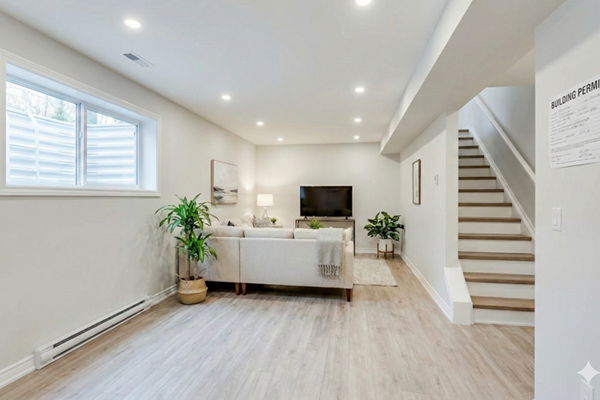
A well-designed basement ADU should feel bright and comfortable rather than dark or cramped.
Key design considerations include:
- maximizing natural light
- efficient use of space
- soundproofing between floors
- modern kitchen and bathroom design
A thoughtful layout can transform a basic basement into a comfortable living space that feels similar to a main-floor apartment.
Why Basement ADUs Are Becoming Popular in Toronto
Many homeowners are exploring basement conversions because they provide several advantages:
Rental Income
A basement unit can help offset mortgage costs through monthly rent.
Increased Property Value
Homes with a legal basement apartment in Toronto often attract more buyers.
Space for Family Members
Basement units are ideal for parents, adult children, or extended family.
Better Use of Existing Space
Instead of leaving the basement underutilized, homeowners can turn it into a practical living area.

Free Guide: Basement ADU Feasibility Checklist
If you're wondering whether your basement could become an ADU, we’ve created a simple checklist to help you evaluate your space.
Our Free Basement ADU Checklist Includes:
- Minimum ceiling height guidelines
- Window and egress requirements
- Entrance options for basement units
- Key safety considerations
- Common renovation challenges
This checklist helps homeowners quickly understand whether their basement has the potential for conversion.
Download the Free Basement ADU Checklist
Thinking About Converting Your Basement Into an ADU?
Creating a basement ADU requires careful planning, thoughtful design, and construction that meets building standards.
A properly designed basement unit can provide:
- reliable rental income
- comfortable living space for family members
- long-term value for your property
If you’re considering building a basement apartment in Toronto, a professional evaluation can help determine the best way to transform your space.
Contact us today to discuss your basement conversion project and explore the possibilities for your home.
Frequently Asked Questions About Basement ADUs
Are basement ADUs legal in Toronto?
Yes, basement ADUs are allowed in many residential homes as long as the unit meets local zoning and building requirements. These units are often called legal basement apartments in Toronto and must comply with safety regulations such as fire separation, proper exits, ventilation, and minimum ceiling heights.
What is the difference between an ADU and an ARU?
An ADU (Additional Dwelling Unit) is a secondary living space on the same property as a main home. An ARU (Additional Residential Unit) usually refers to a similar concept within an existing building. In many cases, a basement apartment can be considered either an ADU or an ARU depending on the terminology used in regulations.
How much does it cost to build a basement ADU?
The cost of converting a basement into an ADU can vary depending on the size of the space, the condition of the basement, and the level of renovation required. Major factors include plumbing installation, kitchen and bathroom construction, electrical upgrades, and finishing work.
Do I need a permit to build a basement apartment?
Yes. Converting a basement into a secondary residential unit typically requires building permits and compliance with basement apartment requirements in Ontario. Working with professionals helps ensure the project meets safety standards and local regulations.
