Basement Separate Entrance: Cost & How-To Guide 2026
December 2, 2025
Legal vs Illegal Basement in Toronto | Facts you must know in 2026
December 12, 2025
Legal Basement permits and requirements in 2026 - The complete guide
Written by : Marjan Jannati
Hey there, fellow GTA homeowner! If you're staring at your unfinished basement in Toronto, Mississauga, Brampton, or Vaughan, dreaming of turning it into a cozy rental suite that could pay off your mortgage faster than you can say "egress window," you're not alone. With housing costs through the roof and the rental market hotter than a TTC subway in July, legal basement apartments ("secondary suites" or Additional Dwelling Unit (ADU)) are a game-changer. But here's the catch: skipping the permits isn't just risky, it's a fast track to fines, insurance nightmares, and a resale headache.
I'm writing this as someone who's chatted with dozens of homeowners just like you, stressed about the paperwork but excited about that extra $2,500 monthly income. In this no-fluff guide, we'll break down every permit you'll likely need for a legal basement in the Greater Toronto Area. We'll keep it real, step-by-step, and focused on 2025 updates (like the Ontario Building Code tweaks that make things a tad easier). By the end, you'll feel empowered to tackle this without losing your mind. Let's dive in.
Why Bother with Legal Basement permits? (Spoiler: Your Wallet and Sanity Thank You)
Picture this: You've poured $50K into your dream basement, only to get slapped with a $25,000 fine from the city because it wasn't up to code. Or worse, a fire breaks out, and your insurance ghosts you. Legal permits aren't bureaucracy for fun, they ensure safety (think fire separations and proper wiring), boost your home's value by up to $300K, and let you rent legally on platforms like Airbnb without drama. (carlsonassociates.ca)
In the GTA, rules vary slightly by city, but they all stem from the Ontario Building Code (OBC), Ontario Fire Code (OFC), and local zoning bylaws. Toronto's super streamlined now with online portals, while Brampton and Mississauga might take a week or two longer. Bottom line: Get permits upfront, or regret it later.

The essential basement Permits: Your Basement's Golden Ticket
Not every reno needs all these, but for a full self-contained suite (kitchen, bath, bedroom), expect to juggle a few. So, let's answer the question, what permits do i need to make my basement legal?
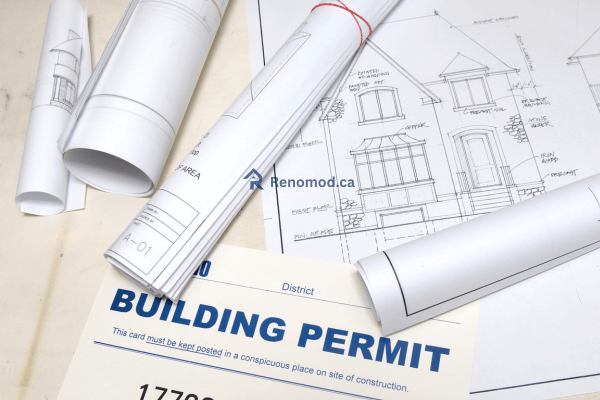
Building Permit: The Big Boss of Legal Basement permits
This is your entry ticket to any structural work. It covers everything from framing walls to installing that separate entrance. Without it, you're building illegally.
- Who Needs It? Anyone adding walls, changing the layout, lowering floors (underpinning), or creating a suite.
- What It Covers: Compliance with OBC for ceiling height (min 1.95m/6'5" over 100% of the space), egress windows (at least 0.35m² opening per bedroom), and ventilation.
- GTA Variations:
- Toronto: Apply via the "Secondary Suite" online portal. Expect 4-8 weeks; fees start at $200 + $0.25/sq ft.
- Mississauga: Submit to Building Division; 7-10 weeks, around $1,500-$2,000 for a 600 sq ft suite.
- Vaughan: Similar to York Region—check zoning first; processing ~10 weeks.
- Pro Tip: Hire a BCIN-registered designer (like an architect or engineer) for stamped drawings. They'll handle floor plans, elevations, and fire separation details for legal basement permits.
Electrical Permit: Shock-Proofing Your Suite
Electricity isn't DIY territory, unless you want sparks flying (literally). This ensures wiring, outlets, and panels meet safety standards.
- Who Needs It? New circuits, sub-panels, or GFCI outlets in wet areas like kitchens/baths.
- Key Authority: Electrical Safety Authority (ESA)—notify them before work starts. They'll inspect and issue a Certificate of Acceptance.
- GTA Scoop: Mandatory in all cities; fees ~$100-$300. In Toronto, integrate it into your building permit app.
- 2025 Update: With smart home tech booming, ESA now flags EV charger tie-ins if you're adding parking perks.
- Real Talk: A licensed electrician must do the work. Skipping this? Fines up to $50K, plus no insurance coverage.
Plumbing Permit: Keeping Things Flowing Safely
From sinks to sewers, this permit verifies your pipes won't flood the neighbors.
- Who Needs It? New fixtures (kitchen sink, toilet, shower) or tying into the main system.
- What It Checks: Hot/cold water lines, drainage, venting, and backflow prevention.
- GTA Details: Handled via the building permit in most spots (e.g., Toronto bundles it). Fees: $200-$500.
- Fun Fact: Shared systems are okay, but the basement needs its own shut-off valve for emergencies.
- Watch Out: Older homes might need septic upgrades—check with local health units.
HVAC/Mechanical Permit: Breathe Easy
Heating, ventilation, and air con—crucial for that fresh-air feel in windowless basements.
- Who Needs It? New ducts, furnaces, or exhaust fans (especially for kitchens/baths).
- Standards: You can either have a separate HVAC system or share the existing system with proper fire/smoke protection. Ventilation must meet the OBC 9.32 requirements for natural or mechanical ventilation (including the required air change or exhaust rates for rooms without adequate windows GTA Vibes: Often bundled with building permits; Vaughan and Mississauga are picky about energy efficiency
- Cost: $150-$400. Pro installers handle inspections.
- Insider Hack: Electric baseboards are a permit-friendly alternative to gas if you're keeping it simple.
Fire Safety Permit/Retrofit: Your Life-Saving Must-Have
Fire codes are non-negotiable, basements are fire traps without them.
- Who Needs It? All suites must comply with the Ontario Fire Code and OBC fire separation rules — typically 30-minute fire-rated walls/ceilings between units and common areas (and up to 45 minutes where there is a shared exit path), plus interconnected smoke and CO alarms. Emergency lighting may also be required where shared exit corridors or stairways serve both units, depending on the layout and local enforcement. “Authority: Ontario Fire Code via local fire services (e.g., Toronto Fire inspects).
- GTA Nuances: Toronto requires a "Fire Separation Plan" in your building app. In flood-prone Brampton, add smoke detectors in ducts.
- 2025 Twist: Easier shared egress in some zones, but heritage homes need extra sign-off.
- Reality Check: Fines for non-compliance? Up to $100K. Plus, tenants won't touch an unsafe space. (ontario.ca)
Zoning/Planning Approval: The Gatekeeper
Not a "Legal Basement permits" per se, but a pre-check to ensure your property allows a suite.
- “Who Needs It? Everyone — zoning/planning checks confirm things like lot size, whether any on-site parking spaces are required, and whether there are heritage or floodplain restrictions. Some municipalities still require at least one on-site parking space, while others – like Toronto in many cases – do not require additional parking for the first secondary suite if no minimum is specified in the by-law.”GTA Breakdown:
- Toronto: Zoning By-law 569-2013—most homes qualify; use the online map.
- Mississauga: Needs min lot size; apply via Planning Division.
- Brampton/Vaughan: Up to 3 units allowed; garden suites need separate planning review.
- Time: 2-4 weeks; free or low-fee.
- Quick Win: Detached/semi-detached? You're golden in 95% of cases.
Secondary Suite Registration/Occupancy Certificate: The Finish Line
Once built, register for official "legal" status.
- Who Needs It? To rent or insure.
- Process: Post-inspection submission; Toronto's portal is a breeze (~$50/unit).
- GTA Perks: Mississauga offers incentives for affordable units; Vaughan ties it to final occupancy.
- Bonus: Gets you CMHC grants for energy-efficient builds.
Common Pitfalls (And How to Dodge Them)
- "It's Just Cosmetic": Nope—adding a sink? Plumbing permit. New lights? ESA.
- Neighbor Drama: They can report you; legal = peace.
- Older Homes: Part 11 OBC gives wiggle room, but underpin if ceilings are under 1.85m.
- Eco-Bonus: 2025 rebates for insulation/HRVs via Save on Energy—up to $5K back.
Wrapping It Up: Your Basement, Your Future
Turning your GTA basement into a legal goldmine isn't rocket science, it's Legal Basement permits, pros, and patience. In a city where a one-bed rents for $2,200+, the ROI (often 10-20% annually) makes it worthwhile. But remember, safety first: A legal suite protects your family, tenants, and bank account.
Want to make your Legal Basement permits process? Stuck on where to start? Chat with a local BCIN Experts