Legal Basement permits and requirements in 2026 – The complete guide
December 8, 2025
Legal vs Illegal Basement in Toronto & GTA: Complete 2026 Guide (Differences, Rules, Fines, Registration Process & Costs)
Written by : Marjan Jannati
In the GTA, basement apartments (second units) are extremely popular because of high rental demand. But there is a massive difference between a legal (registered) basement and an illegal (unregistered) basement. This guide covers Toronto, Mississauga, Brampton, Vaughan, Markham, Richmond Hill, Oakville, Burlington and all of Ontario. In This article de discuss legal vs illegal basement in GTA based on current rules in time of publication.
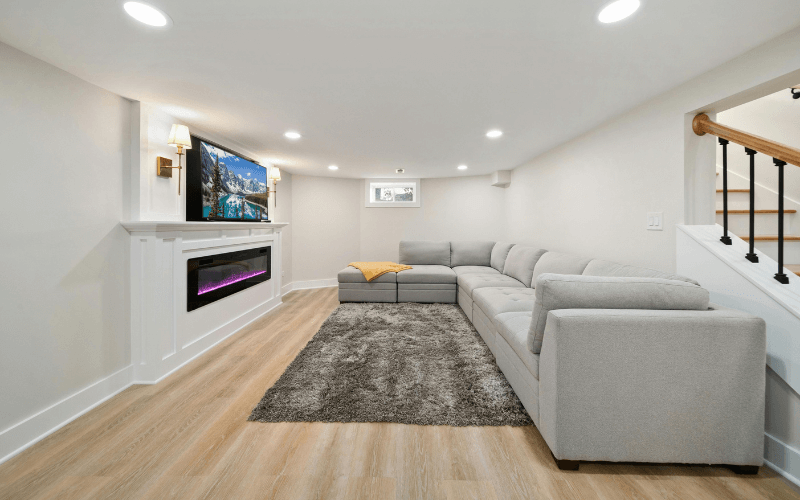
What Is a Legal (Registered) Basement Apartment in Ontario?
A legal basement is officially registered with the municipality and complies with:
- Ontario Building Code (OBC)
- Ontario Fire Code (OFC)
- Local zoning by-laws
- Electrical Safety Authority (ESA) approval
It will have:
- Appear on municipal records as a “Second Dwelling Unit” or “Basement Apartment”
- Have its own separate entrance, kitchen, bathroom and smoke/CO detectors
- Be inspected and approved
Benefits of a Legal Basement:
- Can be legally rented (Airbnb, long-term, students, etc.)
- Increases property value by $100,000 – $300,000+
- Eligible for rental income on mortgage applications
- Full insurance coverage in case of fire/flood
- No risk of $50,000–$100,000 fines or eviction orders
- Easier and faster to sell
What Is an Illegal (Unregistered) Basement?
Any basement that does NOT have municipal registration and full permits, even if it “looks nice”.
Common reasons it’s illegal:
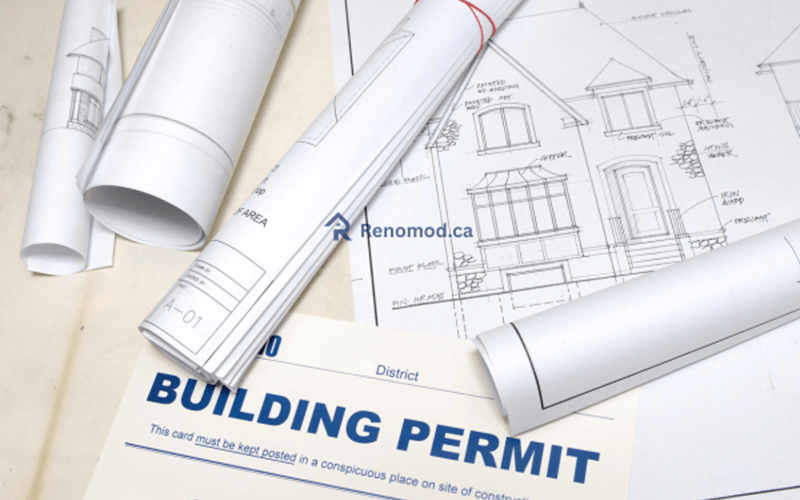
- No building permit was pulled
- Ceiling height under 1.95 m (6′5″)
- Windows too small or no egress
- No separate entrance or entrance through garage only
- Shared furnace room without proper fire separation
- Unapproved electrical or plumbing

Risks of Illegal Basement (Very Serious in 2026):
- Fines: $25,000 – $100,000 per offence (City of Toronto & Mississauga are very strict now)
- Stop Work / Demolition Orders
- Insurance company can deny claims (fire, flood, liability)
- Tenants can sue you or refuse to pay rent
- Cannot list on Airbnb, Kijiji, Realtor.ca legally
- Huge problem when selling – most buyers walk away or demand massive discount
Legal vs Illegal Basement – Quick Comparison Table (GTA 2026)
Feature | Legal Basement | Illegal Basement |
Registered with Municipality | Yes | No |
Separate Address / Postal Code | Yes | Usually No |
Building & Fire Code Compliant | 100% | Usually Not |
ESA Electrical Approval | Yes | Often No |
Fine Risk | None | $25k – $100k+ |
Insurance Coverage | Full | Often Denied |
Rent Legally on Airbnb | Yes | No (will be removed) |
Time to Sell | Normal | Very Slow / Big Discount |
Current Rules for Legal vs Illegal Basement Basements in Toronto & GTA (2026)
- Maximum 1 basement apartment per detached/semi/townhouse) The entire property may have up to three residential units)
- Ceiling height: minimum 1.95 m (6′5″) over 100% of floor area(But for older homes (Retrofit under OBC 9.5.3):A minimum height of 1.85 m may be accepted in exit paths, living rooms, and bedrooms)
- Windows: every bedroom must have window ≥ 0.35 m² with no dimension < 380 mm (egress)
- Separate entrance (side or rear preferred; front walk-out now restricted in many areas)
- Toronto eliminated all minimum parking requirements in 2022, so there is no parking requirement for basement units. However, cities such as Brampton, Markham, Oakville, Richmond Hill, Vaughan, Burlington, Pickering, Whitby, Mississauga and Oshawa. still require one parking space for the main dwelling unit. (The exact requirements vary depending on the zoning district, local planning regulations, and whether the property is a new build or an existing home being retrofitted. In some municipalities, if the primary dwelling has no parking—or if the zoning by-law permits it—a parking space for the second unit may not be required, or the requirement may be reduced)
- Fire separation: 30–45 min rated ceiling + interconnected smoke/CO alarms
- Heating: can share furnace but needs proper ducting or electric baseboard allowed
How to Legalize an Existing Illegal Basement in Toronto & GTA (2026 Step-by-Step)
Good news: Most illegal basements built in the last 20 years CAN be retroactively legalized.
Step-by-Step Process:
- Hire a licensed designer/BCIN engineer (very important)
- Get as-built drawings + structural/fire separation plans
- Submit retrofit permit application to your city (Toronto: online via “Second Suite” portal)
- Pay permit fees ($5,000 – $15,000 depending on scope)
- Do required upgrades (egress windows, fire separation, electrical, etc.)
- Pass all inspections: building, fire, electrical (ESA), plumbing, HVAC
- Receive Certificate of Compliance → now fully legal and registered
Average Cost to Legalize in GTA (2026):
- Minor upgrades + permit: $25,000 – $60,000
- Major upgrades (new entrance, windows, fire separation): $80,000 – $180,000+
- Time: 2–12months
Is It Worth Legalizing Your Illegal Basement in 2026?
Almost always YES because:
- Property value increase usually pays for the cost 2–3 times over
- Rental income becomes 100% legal and insurable ($2,000–$3,500/month in GTA)
- You eliminate massive liability and fines
- Makes the house sell much faster and at higher price
Only not worth it if the house is very old, foundation is damaged, or ceiling height is under 1.9 m.
Final Advice for Toronto & GTA Homeowners
when we consider legal vs illegal basement, and Toronto’s new aggressive enforcement (2025–2026) it makes sense to invest in legalizing basements. While illegal basements are being reported by neighbors, tenants, and even insurance companies. Fines and forced evictions are rising fast.
If you have an illegal basement or are planning to build one → start the legalization or proper permit process immediately. Book your free consultation today.